
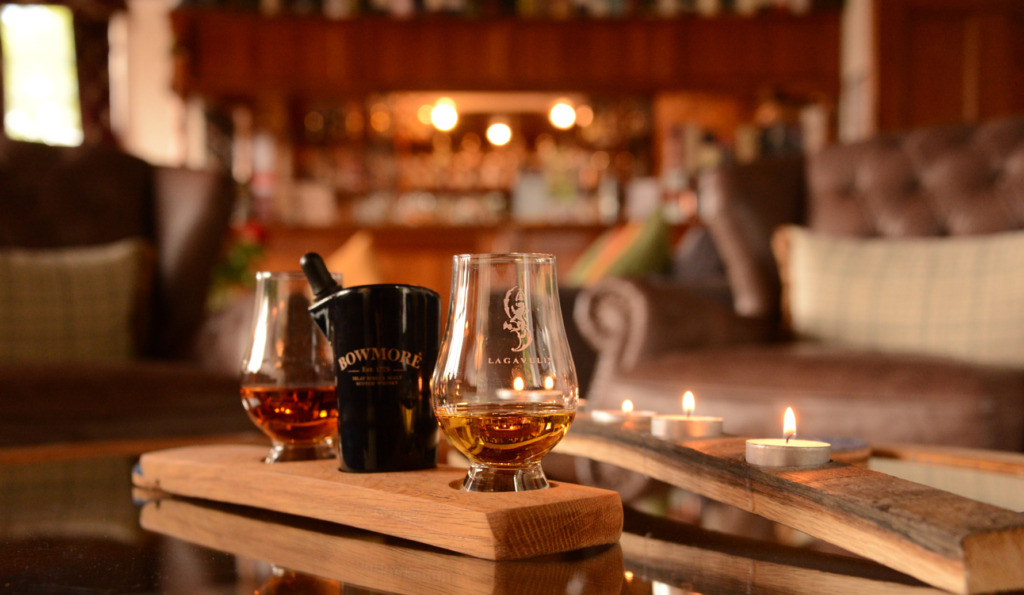
Welcome to our Whisky Bar (Bar 1890) A place where you can relax and enjoy a drink from our extensive collection of beers and malt whiskies.
At Creag Mhor Lodge we are delighted to be able to offer a extensive range of wines, beers and spirits. The main attraction of course is our collection of single malts where the collection now has grown to over 340 single malts.
At Creag Mhor Lodge, we are very proud of our whisky bar. We are all whisky fans and want to make sure that our guests get the chance to have a great whisky experience no matter if you are new to whisky or a seasoned connoisseur. Scotch Whisky is the very best in the world and where better to experience its delights than in the Scottish Highlands.
Our Promise
In our bar we commit the following promises to you;
35 ml measures. We currently serve all our whiskies as 35ml measures. This is 40% more volume than most commercial bars. A lot of our whiskies are also cask strength, around 50%-60% ABV as opposed to 40%-46% for the majority of bottled whisky.
Variety. We will try and give you as extensive a range of whiskies to rival any whisky bar. We currently hold over 100 bottles of single malt whisky in the bar, covering all 5 Scottish whisky regions, with many variants from the classic distilleries.
Rarity. We will strive to stock whisky that you will not be able to get at home. This may be from distilleries that no longer exist, or whiskies that are particularly old or from small batches. We buy premium whiskies and lay them down for a number of years, so that we can bring them onto the bar in later years when they have long sold out and are no longer available.
Guidance. Our small team of enthusiastic staff are here to assist and guide you through the collection of whiskies we have on offer. They will be happy to recommend a whisky for you based on your preferences.
History
Distillation of whisky has been performed in Scotland for centuries. The production of whisky from malted barley is first mentioned in Scotland in an entry on the 1494 Exchequer Rolls: “Eight bolls of malt to Friar John Cor, by order of the King, wherewith to make ‘aqua vitae’.
From the 15th century onwards, whisky was heavily taxed in Scotland, to the point that most of the spirit was produced illegally. However, in 1823, Parliament passed an act making commercial distillation much more profitable, while imposing punishments on landowners when unlicensed distilleries were found on their properties. George Smith was the first person to take out a licence for a distillery under the new law, founding the Glenlivet Distillery in 1824.
Today, in Scotland there are 143 licensed distilleries producing Scotch Whisky. When looking to buy a whisky of the same style and characteristics to one you already enjoy, the region in which the whisky is produced should be considered but by no means should it be used as the only guideline.
The Scotch Whisky Association have five official whisky regions in Scotland. However, we like to believe that there are in fact, six regions producing Scottish Single Malt Whisky, click below to find out more:
Highlands.
The Highlands is by far the largest of all the whisky producing regions and offers you the greatest variations of style.
Western Highlands, there are only a few distilleries here. The malts from these West Highland distilleries are much less peaty than the malts which are found in the Islay region, although you can detect a slight whiff of smokiness. They tend to have a sweet start and dryish finish.
North Highlands malts are greatly influenced by the local soil and the coastal location of the distilleries. They tend to be light bodied whiskies with a spicy character and a dryish finish, sometimes with a trace of saltiness.
Central, Southern and Eastern Highlands malts are quite a mixed bunch. They are generally fruity and sweet but not as sweet as the malts found in Speyside. They are lighter bodied and sweet and just like other Highland malts they tend to have a dry finish.
Speyside.
Speyside was only official recognised as a whisky region in 2009. Beforehand it was generally accepted as a subdivision of the Highlands Region. Over half of all Scotland’s distilleries are located in Speyside. Speyside malts are typically the sweetest of all Scotch Whisky Malts and many of the most popular single malts are produced in Speyside.
The huge selection of Speyside malts offer a variety of strengths and can generally be broken down into two categories, the heavy, rich sherry flavoured malts and the more complex light floral flavoured malts. Speyside malts are essentially sweet whiskies, although some can have a little peaty character with just a slight whiff of smoke.
The Islands.
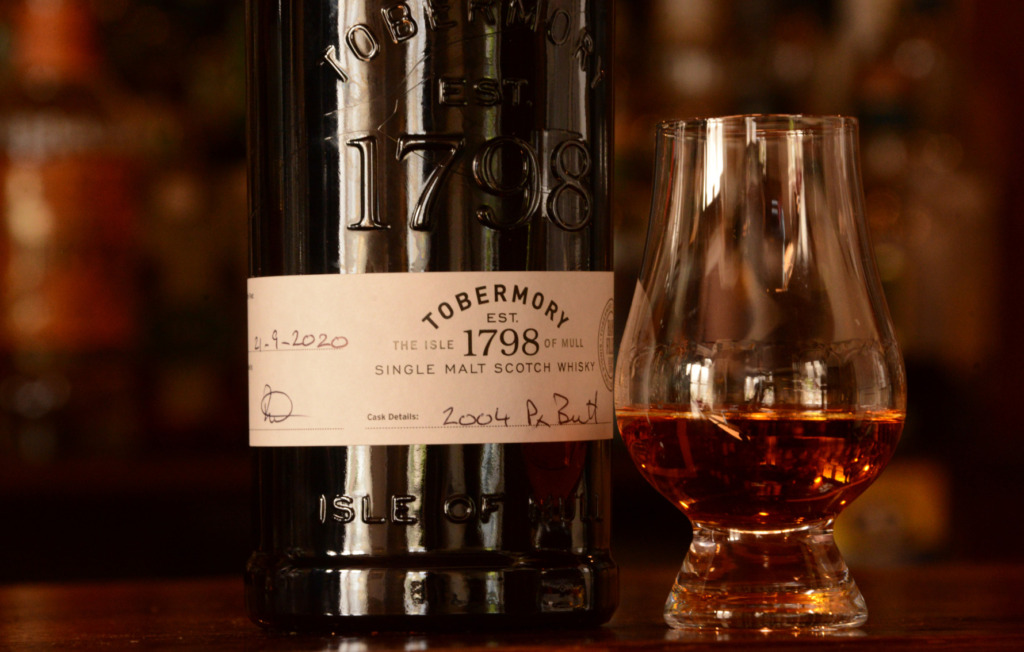
The Islands are not officially a whisky region. The Islands is another subdivision of the Highlands Region. The Islands region includes all of the whisky producing Isles of Scotland namely Mull, Skye, Orkney, Arran, Jura and Lewis. The Isle of Islay is considered a region on its own.
Due to the location of the Islands distilleries their whiskies tend to have a coastal feel to them. They are slightly more peaty in character than most Highland malts but not to the extent of peatiness that you will find in Islay malts. The peatiness is generally softer and sweeter than their cousins from Islay.
Islay.
Islay whiskies are the strongest flavoured of all Scotch whiskies and tend to be dry and peaty. They are renowned for their strong peaty smokiness which comes from the peat fuel which they use for malting the barley.
The character of Islay malt whiskies are very often described as being very smoky, medicinal, salty and sea weedy with a dry finish and sometimes with quite a bite.
The smoky flavour of Islay malts can be an acquired taste, but if you have a taste for a smoky dry malt then Islay malts are the malts for you.
Lowlands.
Malts from this region are light in colour and have quite a dry finish. The dryness comes from the malt itself, not from peat as lowland malts tend to be produced with unpeated malt. You may also find a certain sweet fruitiness to the flavour. Lowland malts are regarded as an excellent aperitif.
Generally speaking, Lowland region whiskies are mellower than whiskies from the neighbouring Highlands, and are very much appreciated by those new to malt whisky and experienced malt drinkers alike.
Campbeltown.
Today there are only three distilleries producing whisky here, but in days gone by there were over 30 distilleries here. The Campbeltown single malts are very distinctive, tending to be full bodied, renowned for their depth of flavour and also for their slightly salty finish. With peat adding a hint of flavour similar to that found in an Islay malt.
Drinking it!
There are many opinions on how best to drink a nice malt whisky. None of them are wrong, as it is your drink and if your method works for you, then don’t listen to anyone else. We do get asked regularly ‘how do you drink your whisky, so we are happy to share in the spirit of helping you along your whisky journey. So here goes;
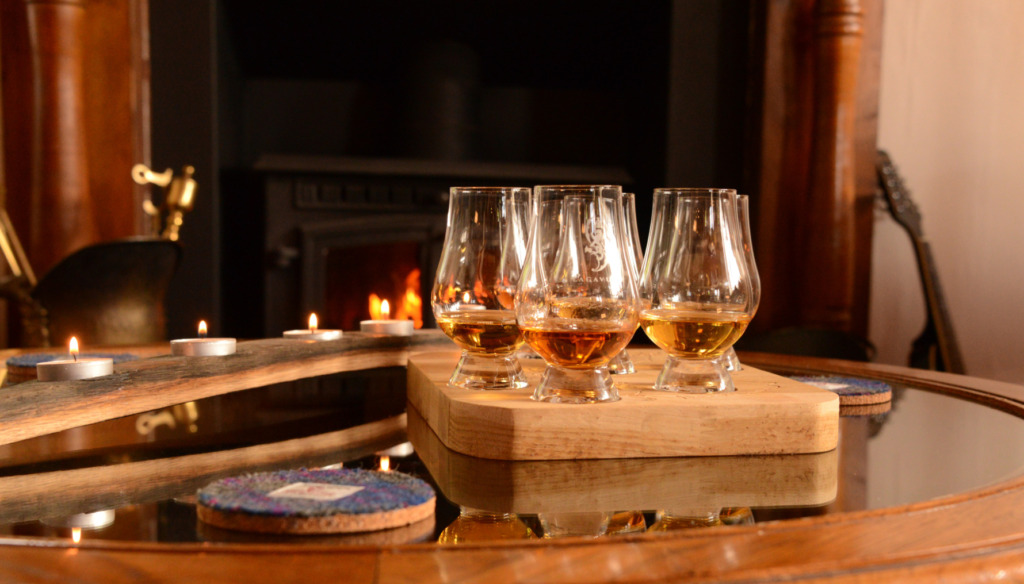
- Choose a glass that will help intensify the aroma. Cairn glasses are good for this as the smells are condensed as they leave the glass due to the smaller diameter opening.
- Smell the whisky first. Swirl the whisky or heat the glass with your hands, to put energy into the whisky to help release the aromas. Tilt the glass and smell one nostril at a time from the top of the glass opening. That is where the smells will be most intense.
- Take a small sip of the whisky neat. It will probably have an intensity of flavour that is hard to decipher, but it will alert your tastebuds and your brain as to what is coming next. It is likely to also generate a small burning sensation as the whisky passes through your neck and chest.
- Add approximately 5 ml of room temperature water to your 35 ml dram. This process breaks the delicate molecules in the whisky and releases new flavours and aromas from the dram.
- Repeat step 2 and sense the subtle changes in the aroma
- Now take your first proper sip. The flavour of the dram should have ‘opened up’ and the burning sensation should have mellowed or completely disappeared. Not only will this allow you to taste the complexities of a good whisky, it will also allow you to distinguish between the flavours at the start, middle and end of each sip.
Many of you might be thinking ‘where is the ice?’ or ‘do you not use stones?’, well we don’t use either. For the simply reason that cooling your drink, dulls the tastebuds and we don’t want that to happen. We want our tastebuds to be fully fired up ready to analyse every sip.
We find that people that try our way of drinking Scotch Whisky finds the experience quite eye-opening. So come and give it a go!